And let me preface this with a caveat. I'm going to throw out a bunch of historical facts and tidbits that combine what I remember with what wikipedia tells me, so high schoolers, don't base your research paper off this. However I will guarantee that if you visit Angkor Wat, biking is a great way to get around because Angkor is actually a few miles outside the city of Siem Reap, and the temples are spread out.
On to the temples.
Here's the gate leading to Banteay Kdei, built in the late 1100's or early 1200's.
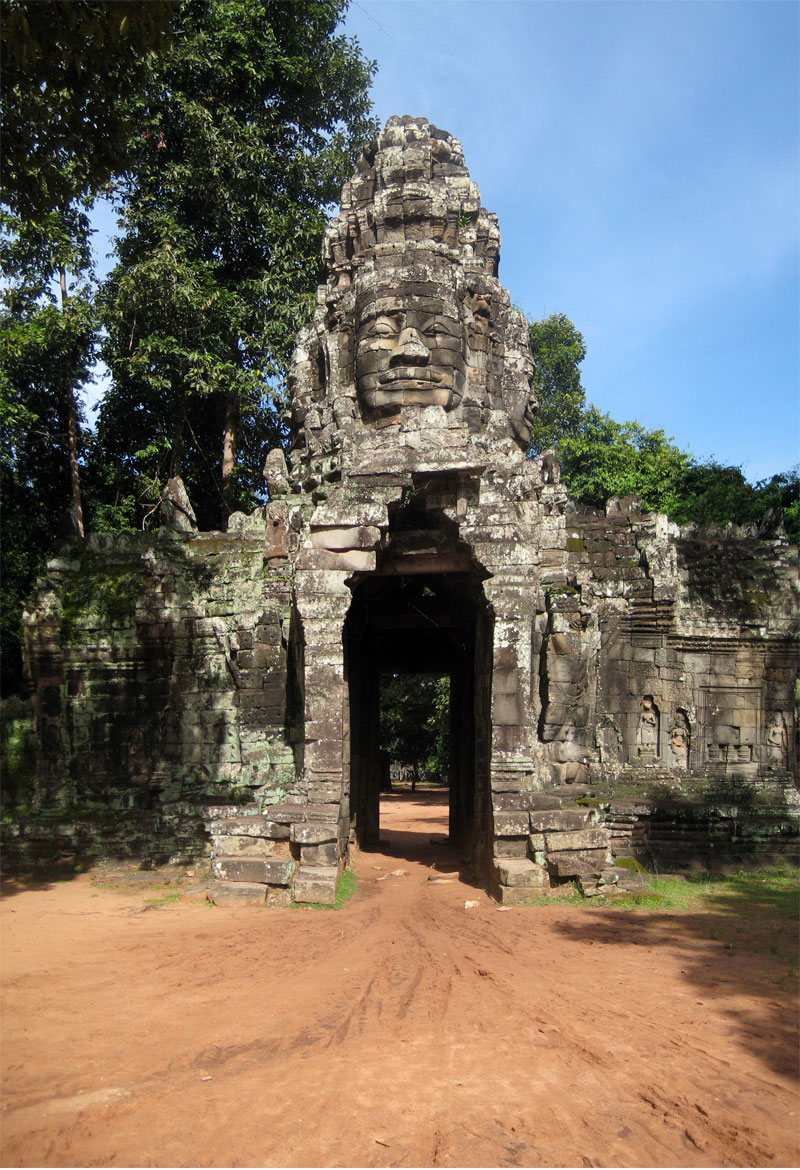 In case you're wondering, yes that is Buddha. The interesting thing about these temples is that some kings were Buddhist and other's Hindu, so when a Hindu king was in power he'd co-op Buddhist temples, defacing as much specifically Buddhist artwork as possible, and if a Buddhist king was in power he'd do the same to Hindu temples.
A few shots of hallways inside the temple.
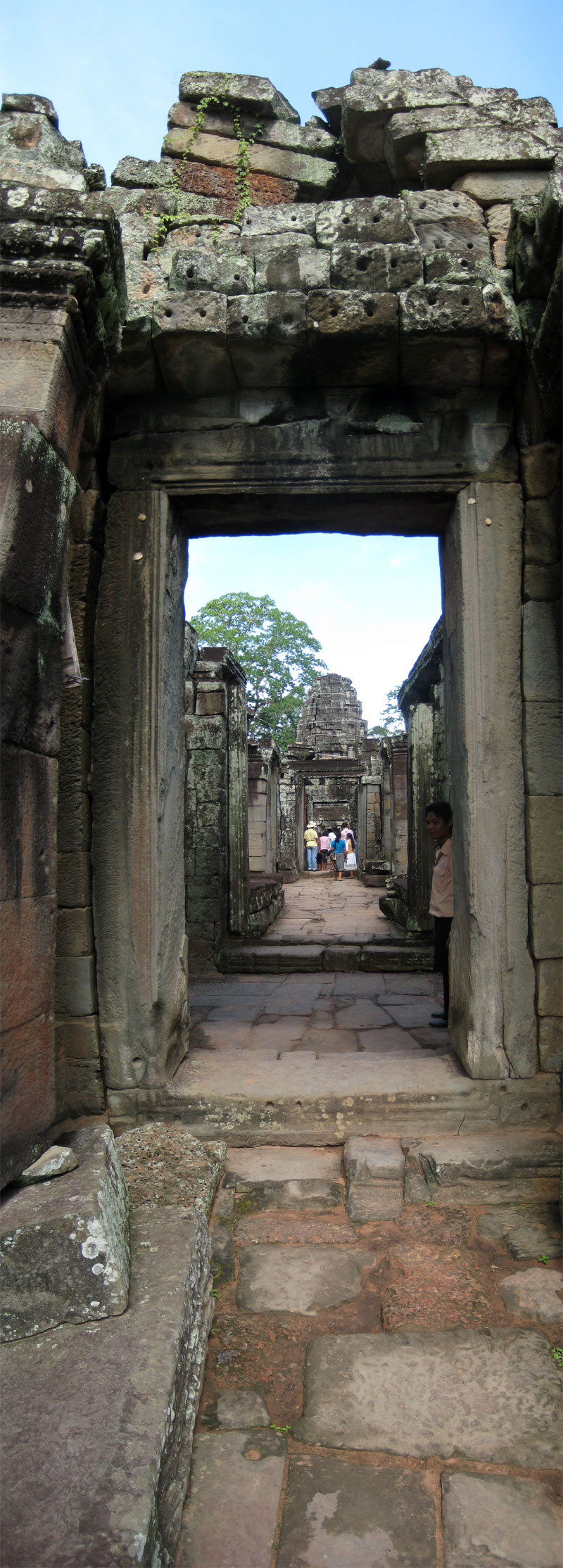
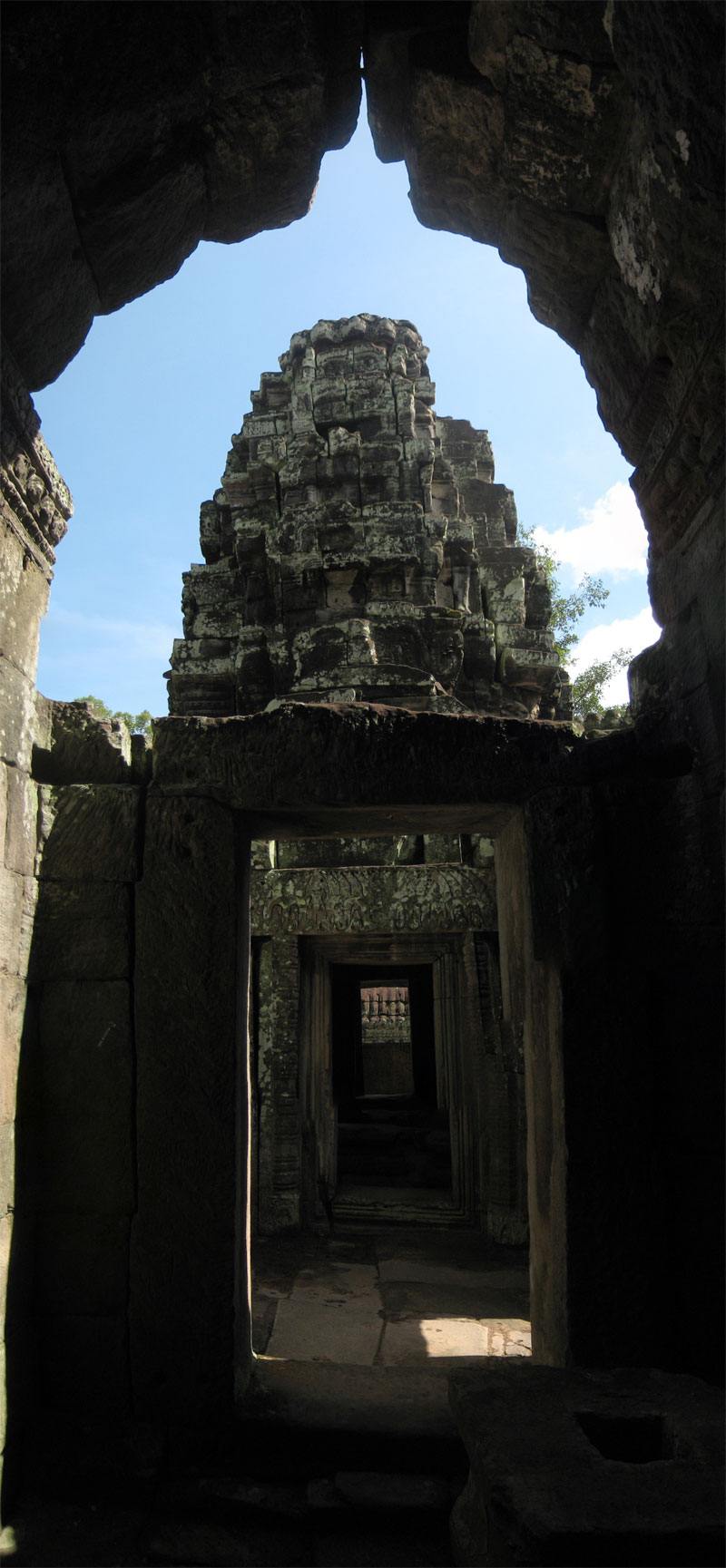 There's also some amazing bas relief work throughout the temples in Angkor. Here's a few in Banteay Kdei.


The carvings depict classical Cambodian dancers called Apsaras, and back when the temples were active Apsaras would dance in the temples. However I doubt they had such flexible bellies.

The temples are made out of sandstone blocks, gathered from mountains about 20 miles away and transported by boats down the river or by elephants. I really like how the weight of the stones, limited the blocks' size and forced the sculptors to work around seams.

The second temple we saw was Ta Prohm, which was built as a Buddhist monastery and university.
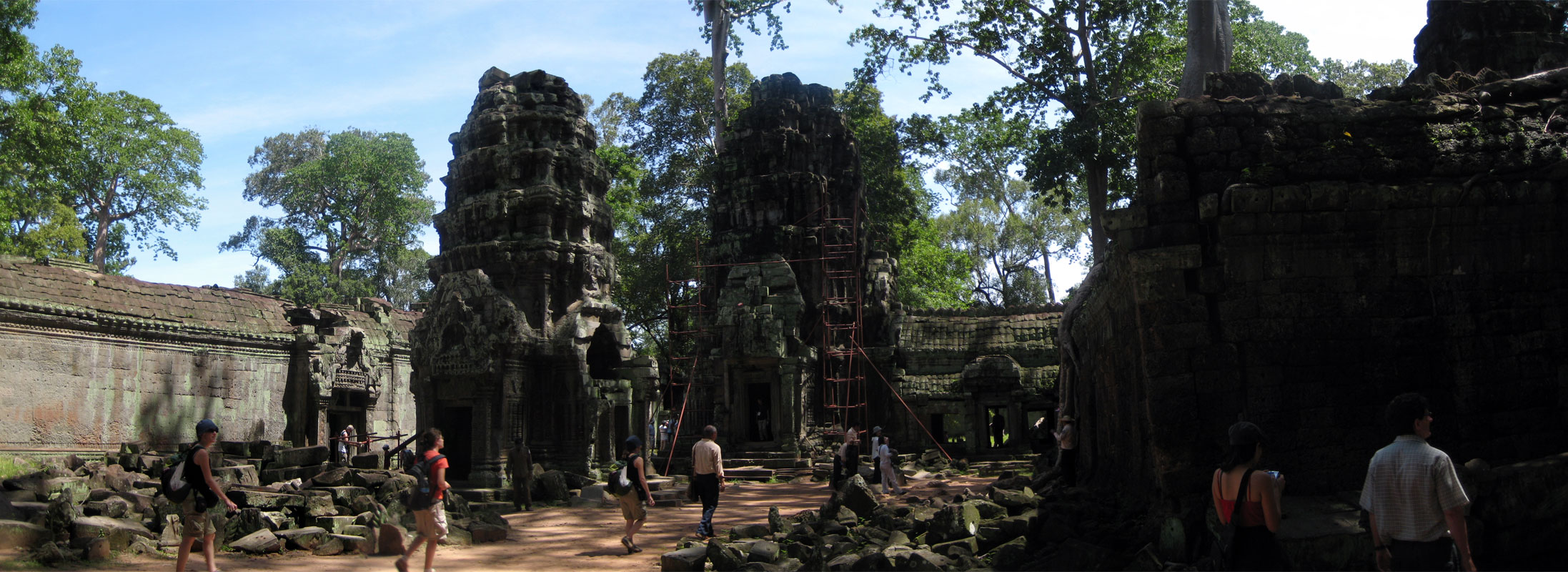 All these temples were more or less abandoned after the Khmer empire collapsed in the 15th century, and Ta Prohm has been mostly left alone, so it gives the best idea of what French explorers must have seen when they first came upon all these temples (just ignore the wooden walkway).
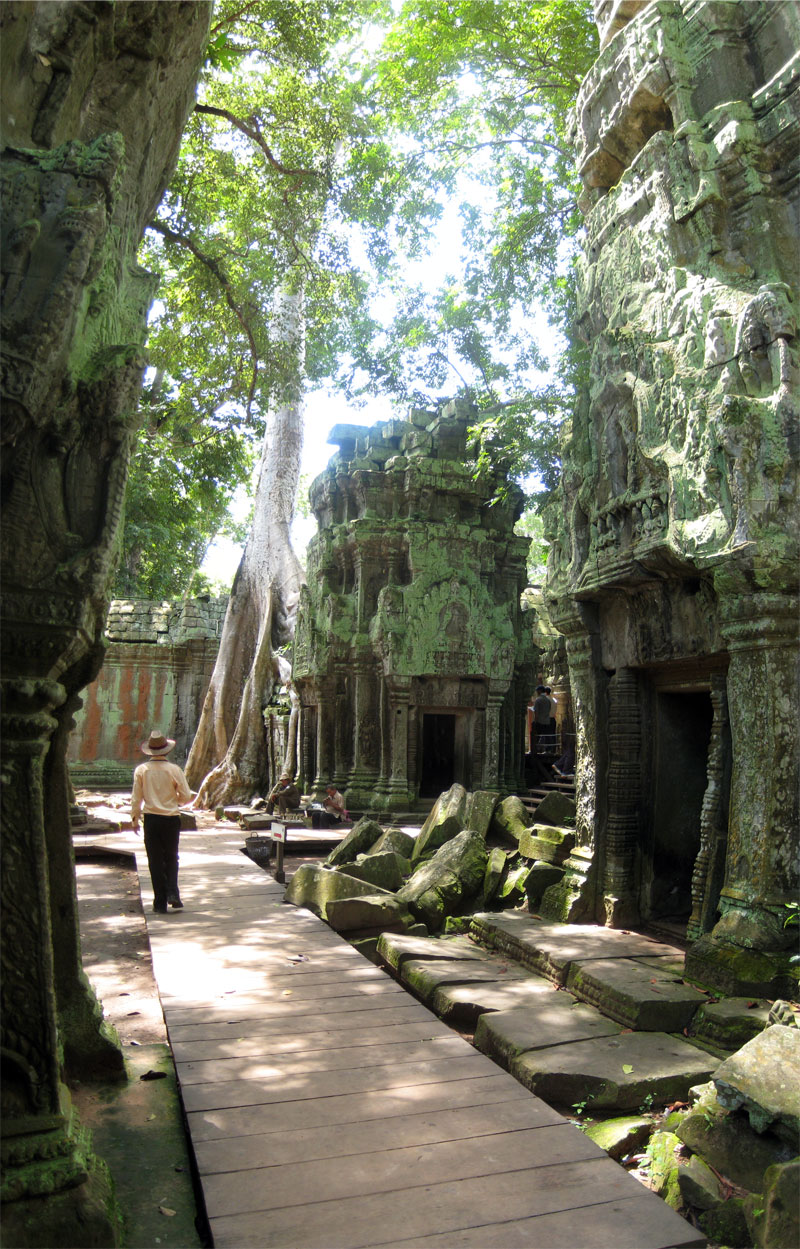
Probably the coolest thing about Ta Prohm is how the trees have grown into and around the structures, and yet it all looks so unified.
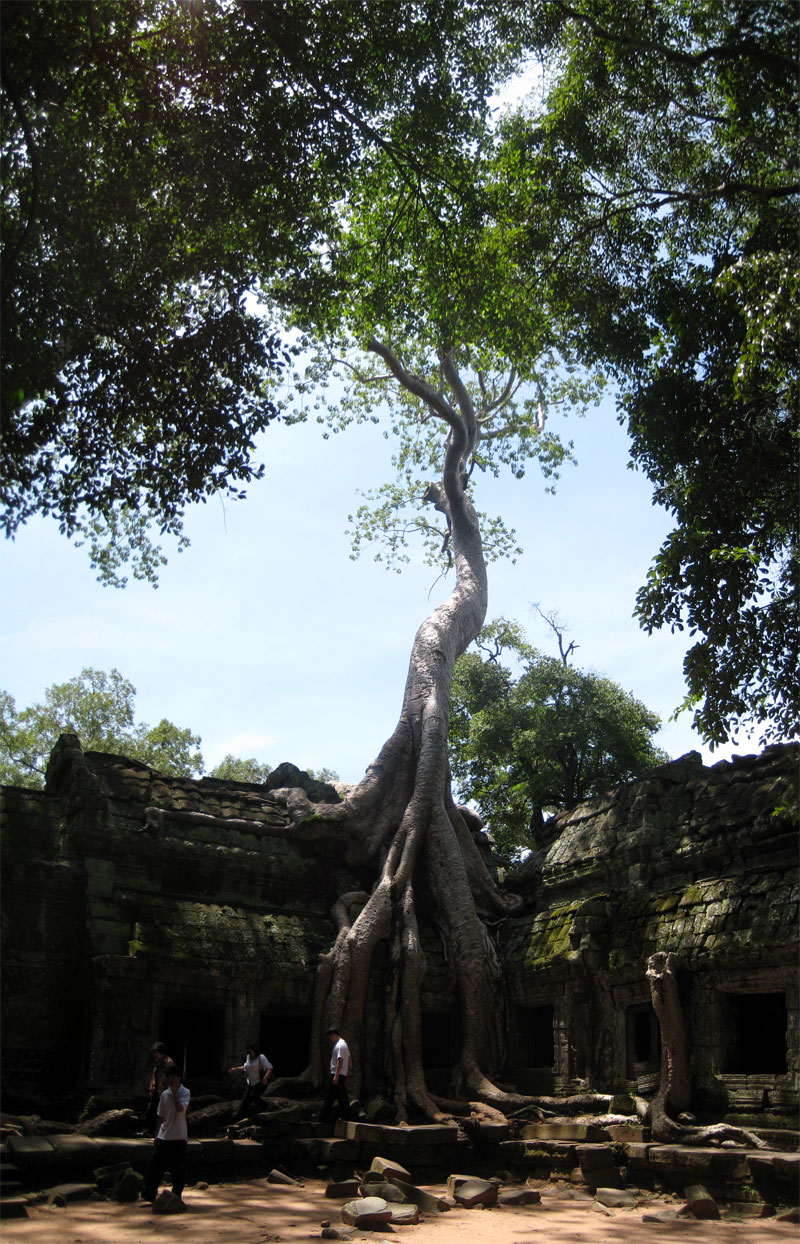
And here we have, I believe Ta Keo.
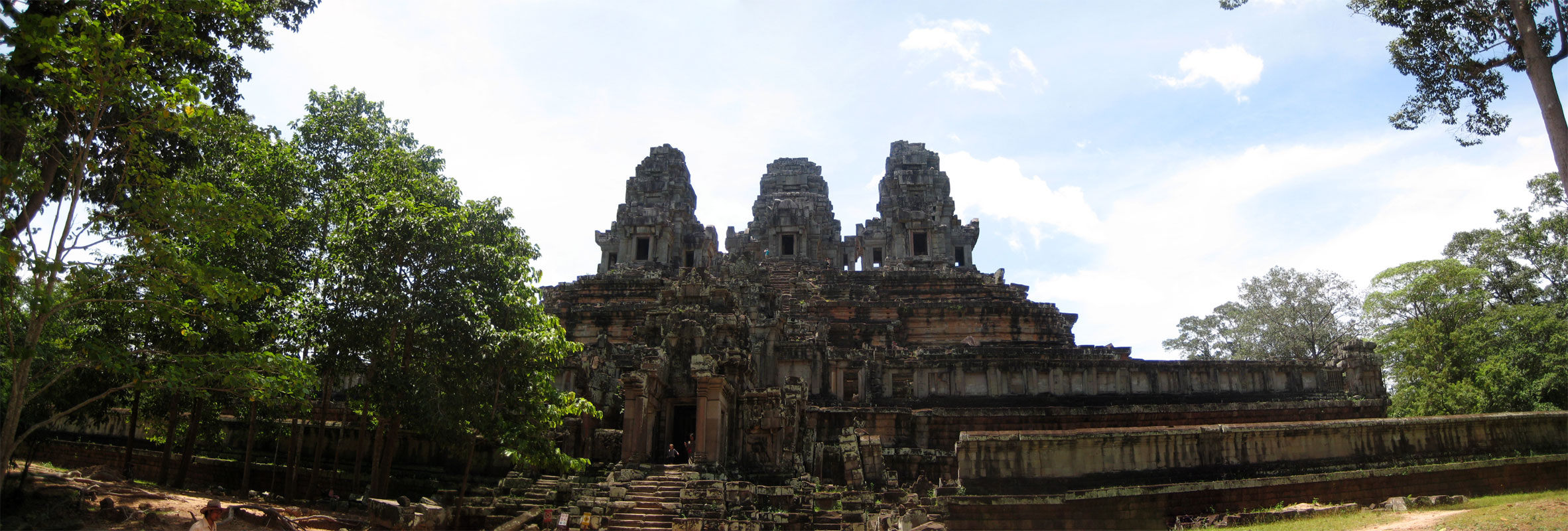 It's a Hindu temple but it's actually unfinished, possibly because during construction it was hit by lightning which they took to be a bad omen.
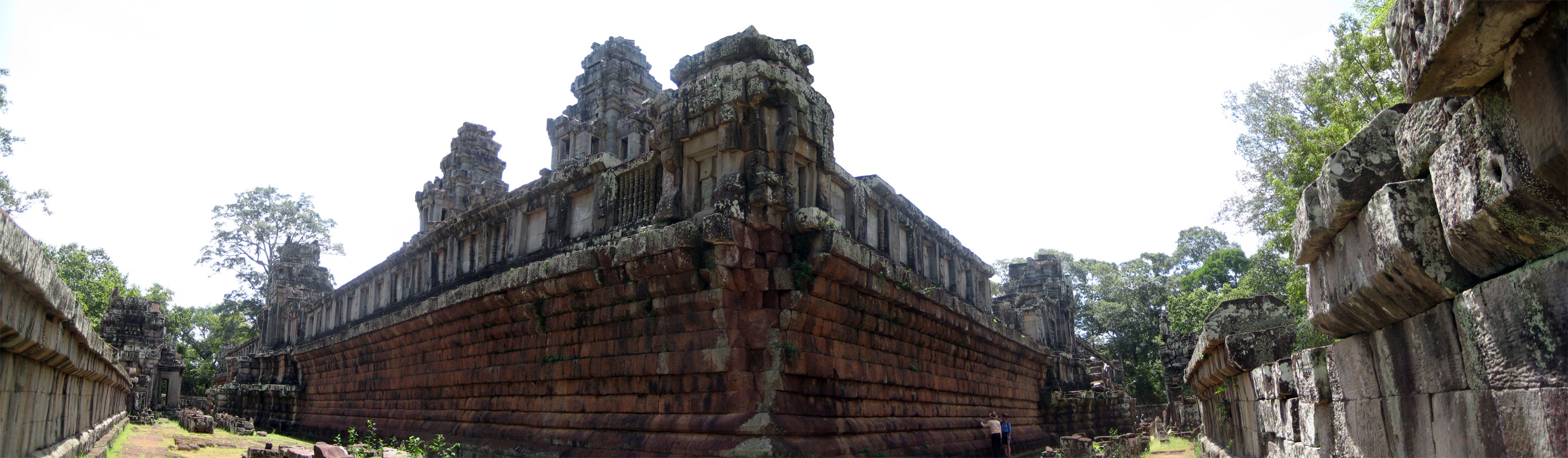
Pyramid temples are more fun because you get to climb the stairs. The steep steep stairs.

Are you ready? Cause it's time for the big one.
ANGKOR WAT
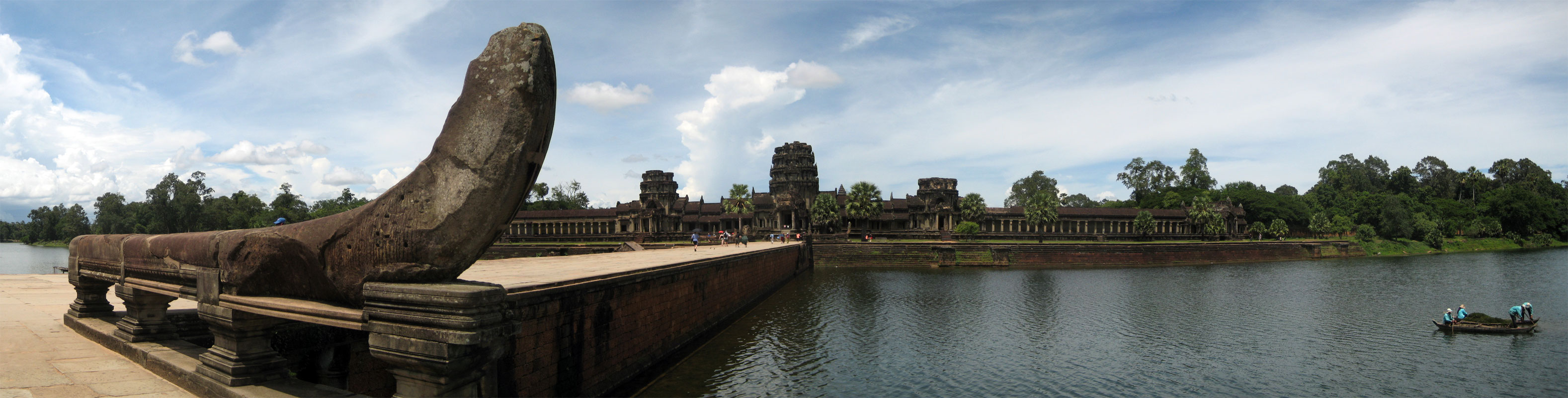
Many of the temples are supposed to be surrounded by moats, but most are small and didn't have any water in them. Not Angkor Wat. And this is just the lead up to the outer wall.
Here's the entrance. Back in the day, only the king was allowed to enter through the center doorway.
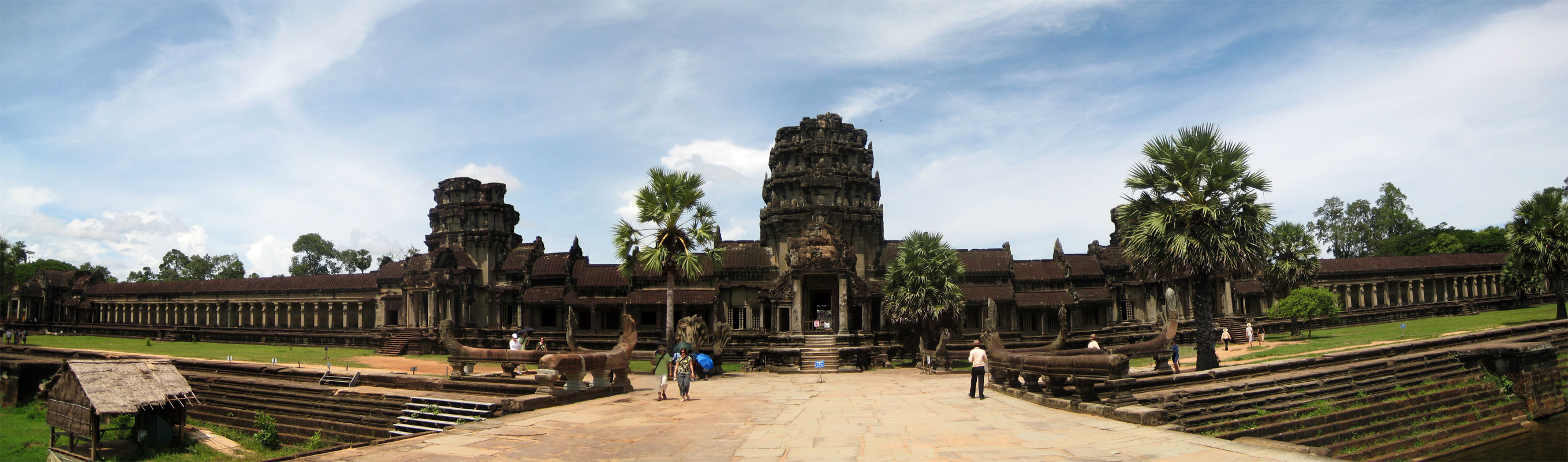
A hallway that's part of the outer wall.

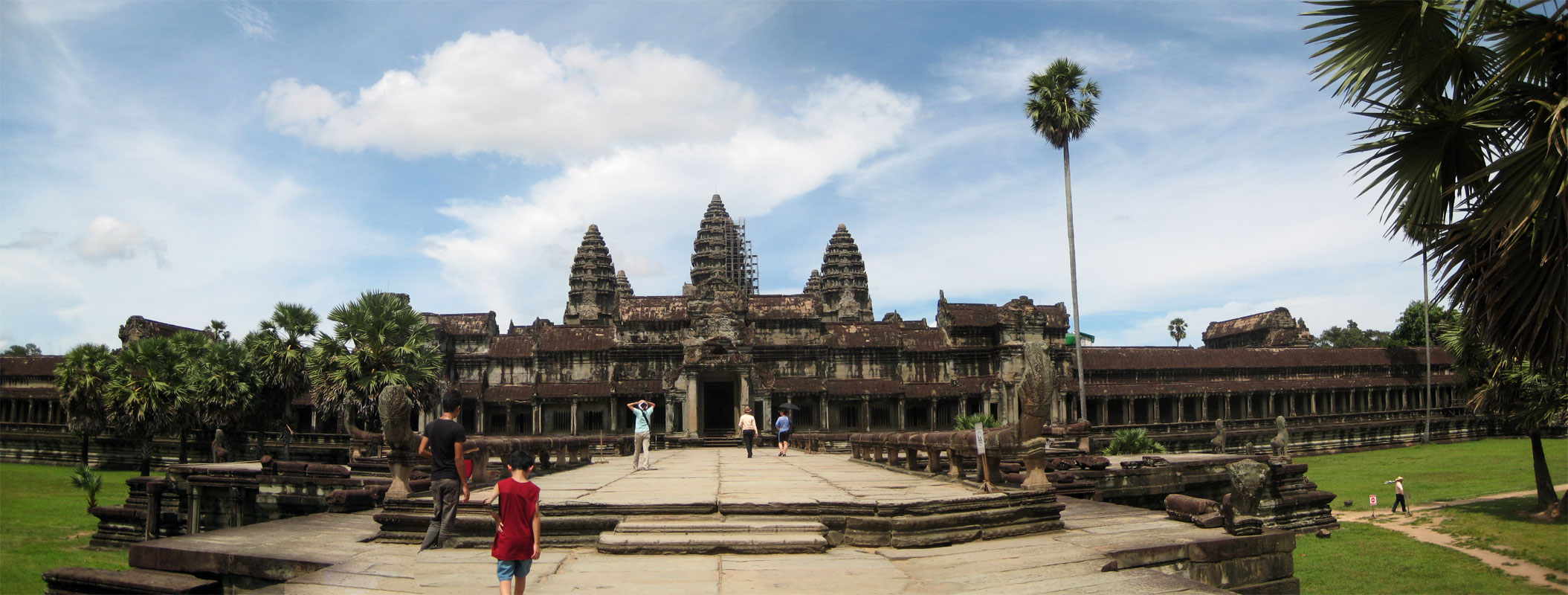
After the outer gate you have another long walk to the temple's center. Here is a view from the center looking back at the outer gate.

And the reverse view, of the temple's center.
Before entering, beware of monkey.
 The hallway.
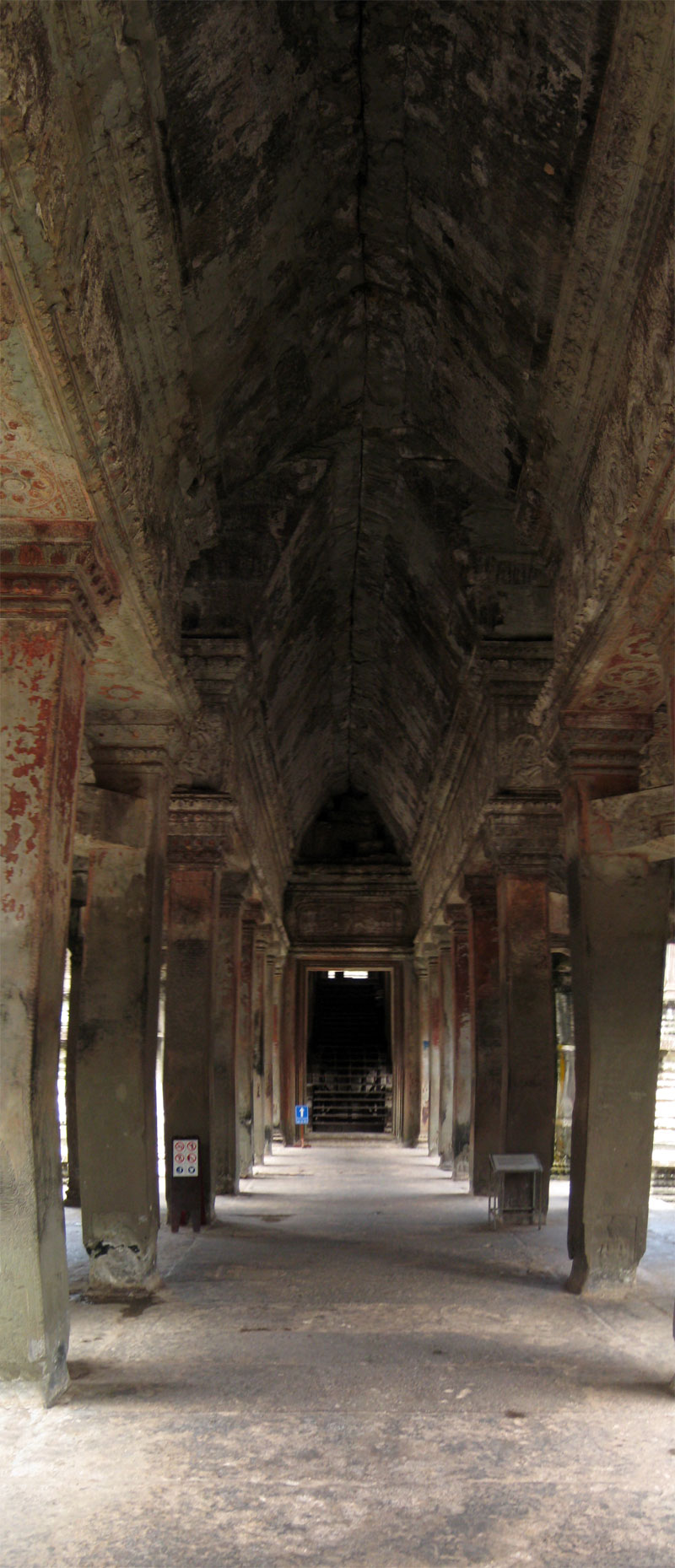 Which leads to.
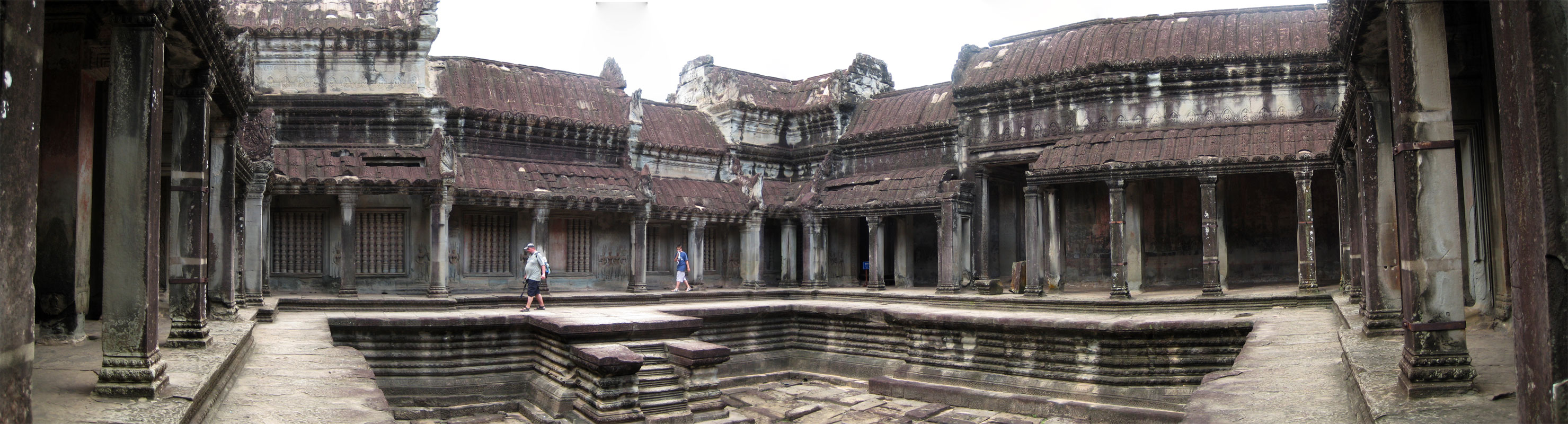 And here is the center structure.
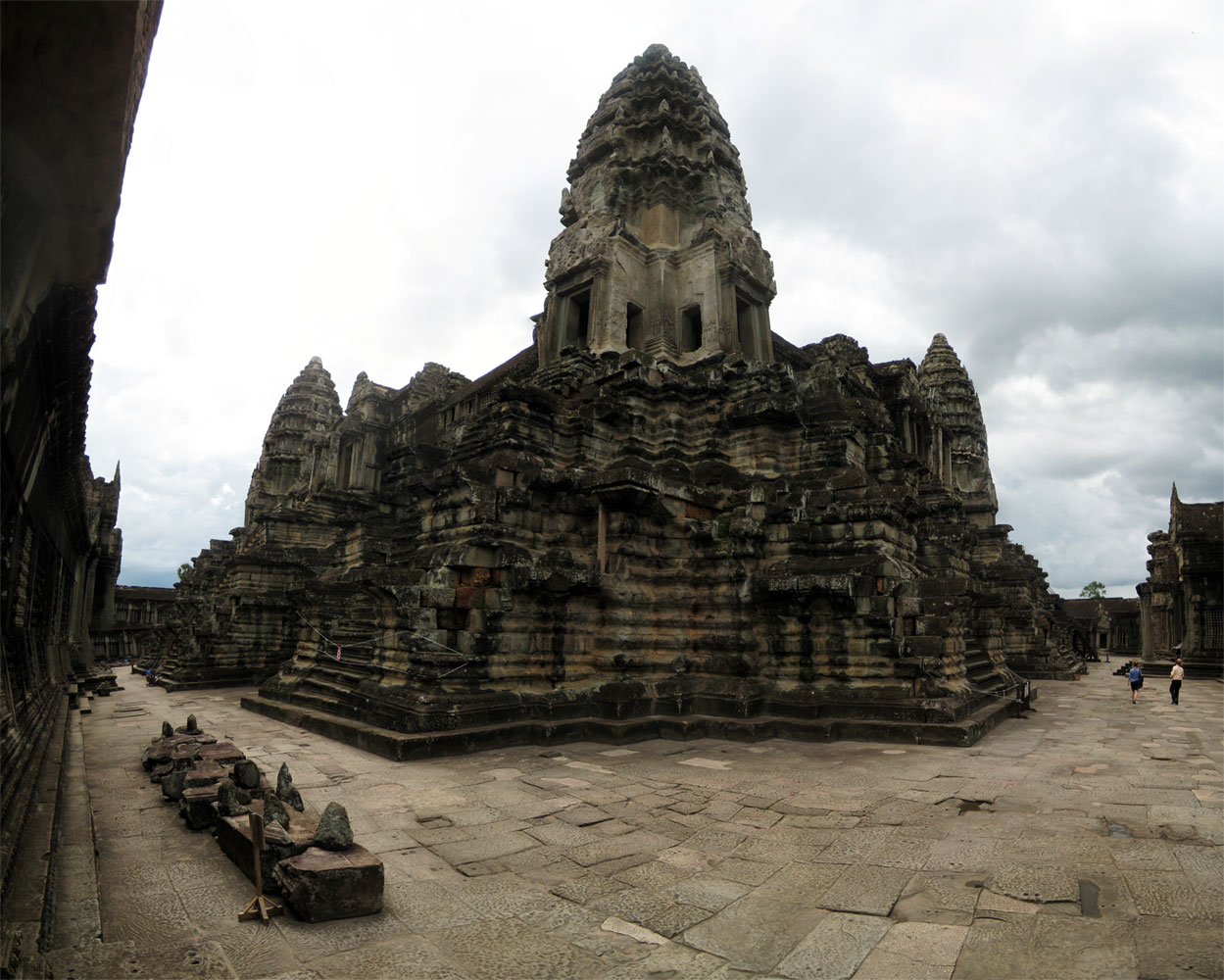
Some bas relief.


It's the rainy season, so guess what it did on the way out.

The rain only lasted about 20 minutes, so we moved on to Bayon.
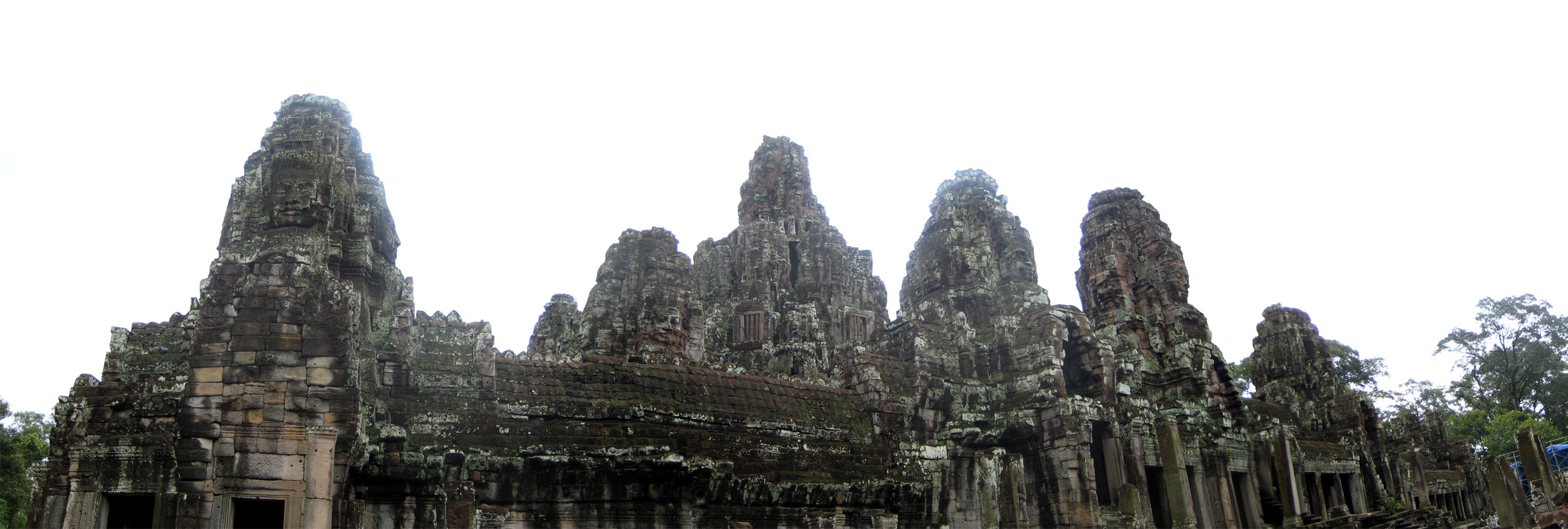 It's a pyramid temple with lots of huge Buddha heads carved into it.

These photos aren't that great because the overcast sky really got blown out. Oh well.

 And in the front is some cool bas-relief work.
 According to wikipedia, these scenes depict everyday life in Angkorian Khmer.


Last up on day one was Phimeanakas, a Hindu temple built on top of a hill. The temple itself, a three tiered pyramid, didn't look that interestin, but the top has a great view.
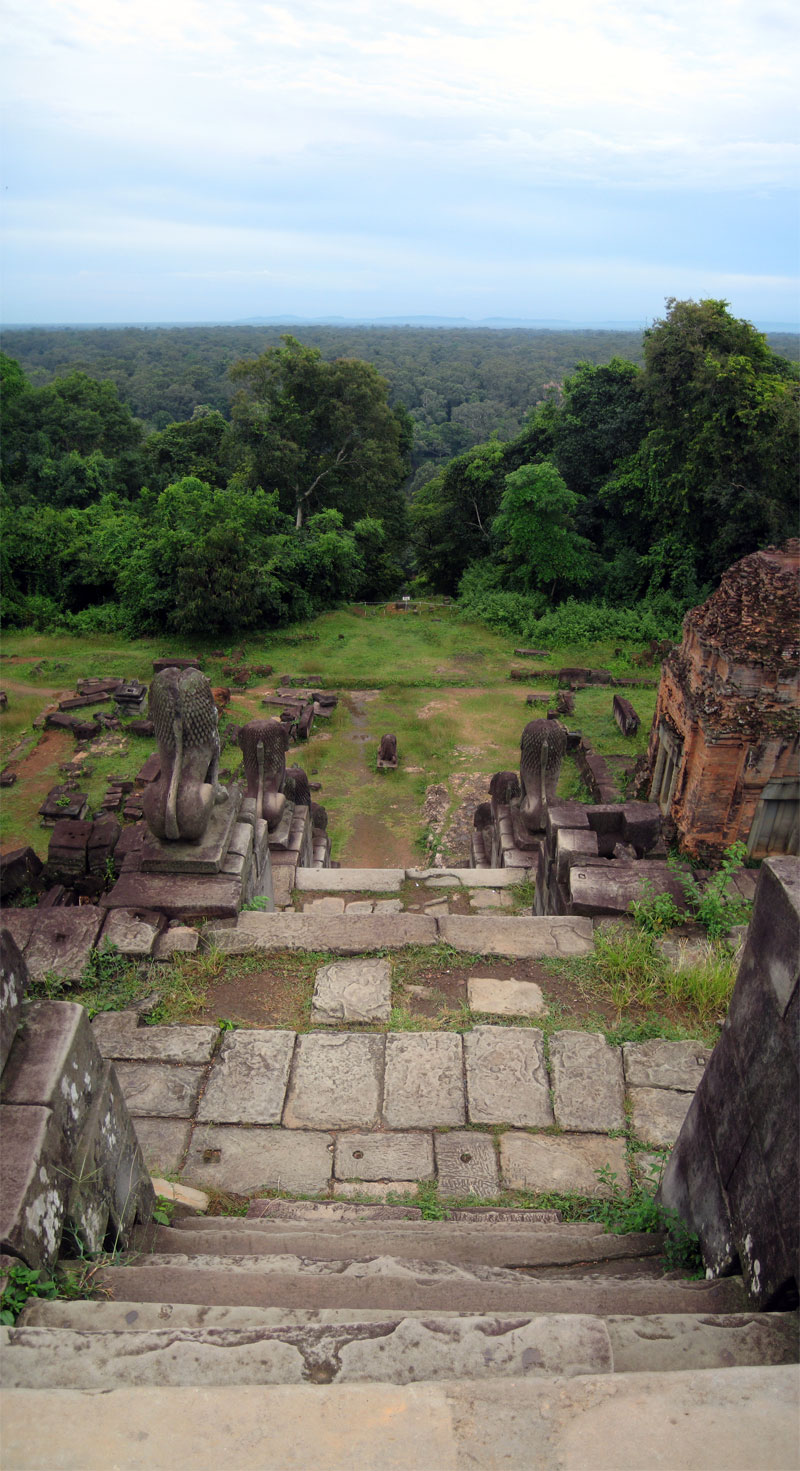
Day two was all about temples farther afield from the main area. I honnestly can't figure out what the name of this first one is, but the pictures are nice anyway.
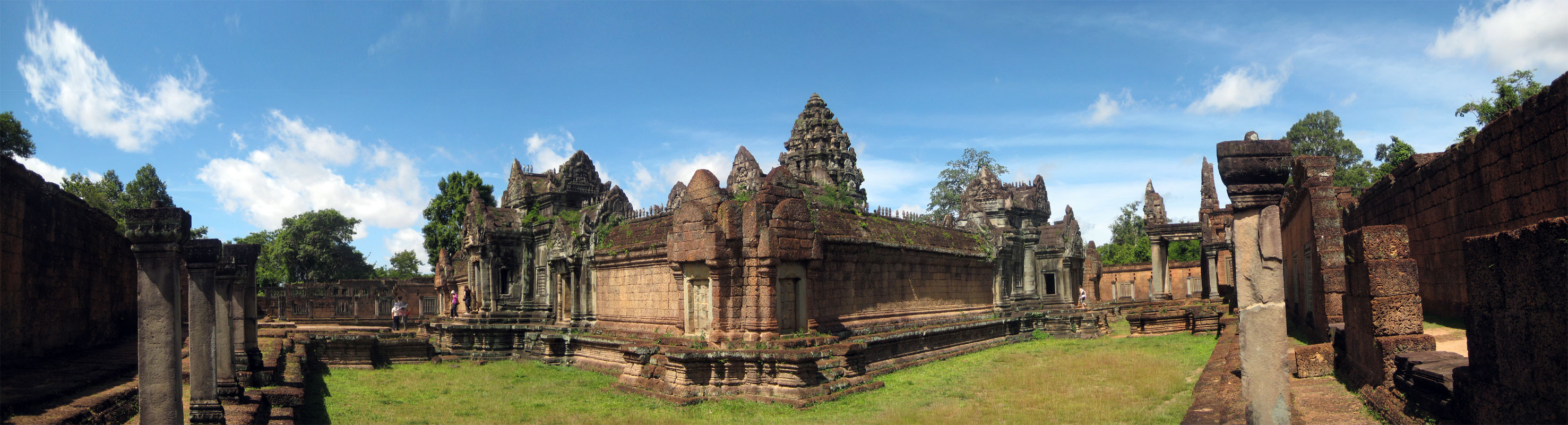 This temple was built with a different type of stone, notice how much more red it is than the other temples.
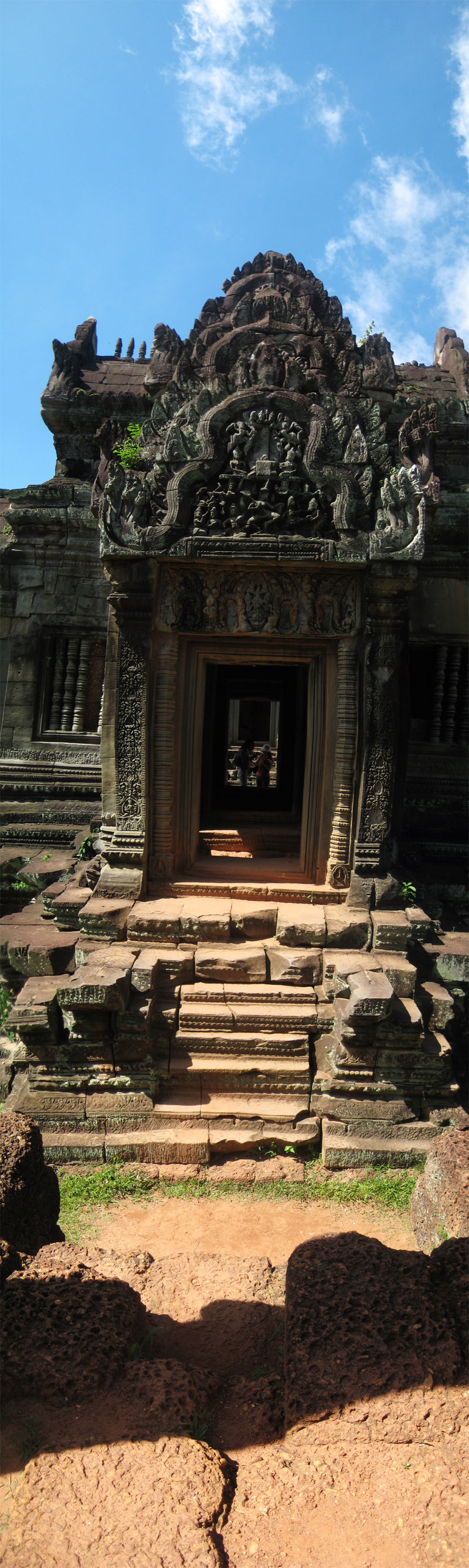
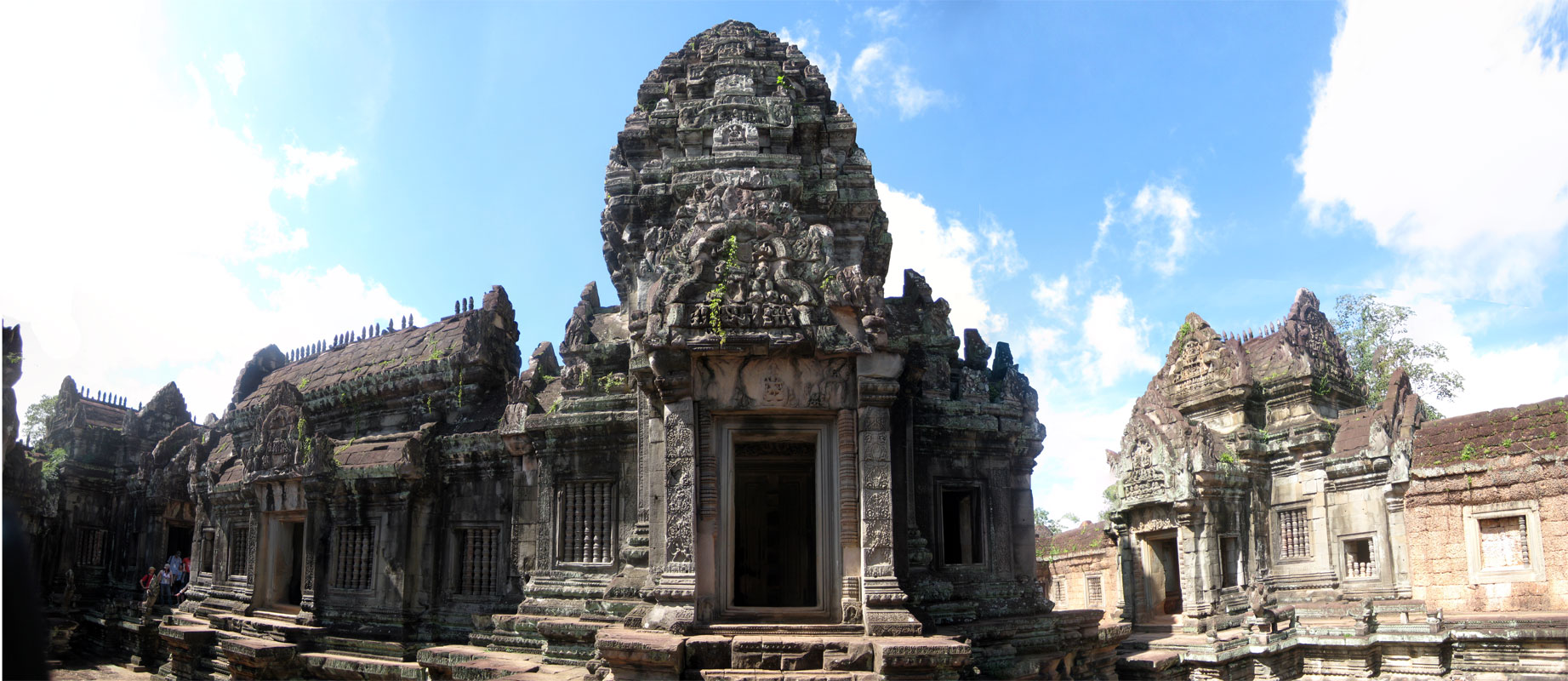
And a few bas reliefs.

I like this weather worn Apsara.

After the first temple, we biked maybe 25 miles to the mountain where Angkor Wat's sandstone came from. The ride was very pretty.
 At the mountain you walk about a mile up a path (and only on the path, because there are still land mines in the area from the Khmer Rogue days) to a river where Hindu gods are carved into the rocks.

The area is called the Valley of 1000 Lingas. The lingas are the small mounds carved out of the rocks.
 As our guide told us, they symbolize the male sexual organ.
After the 1000 Lingas, we back tracked to Banteay Srei.
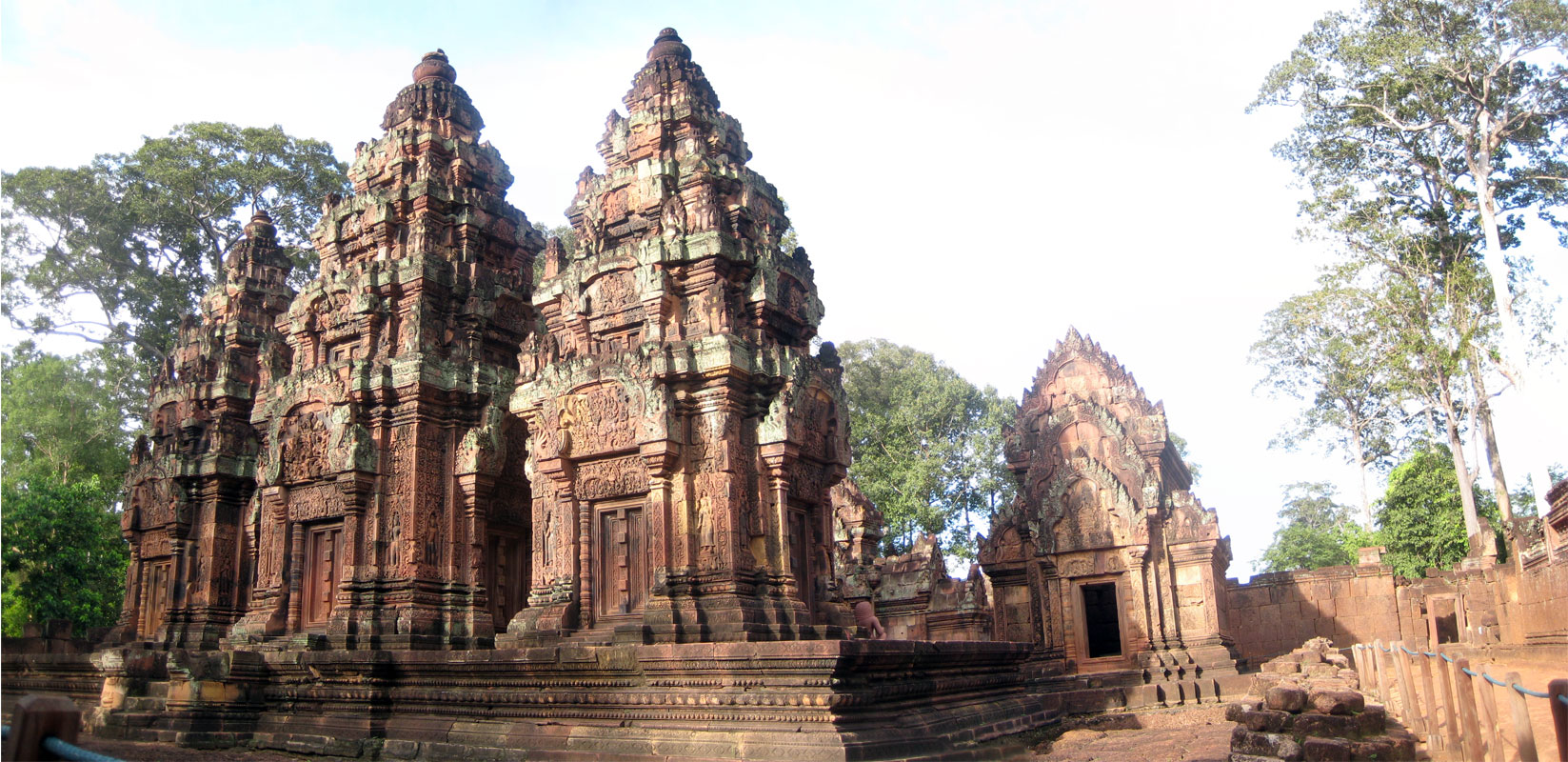 The interesting thing about Banteay Srei is that they restored all the carvings, so you really get an idea of how ornate the temples was.
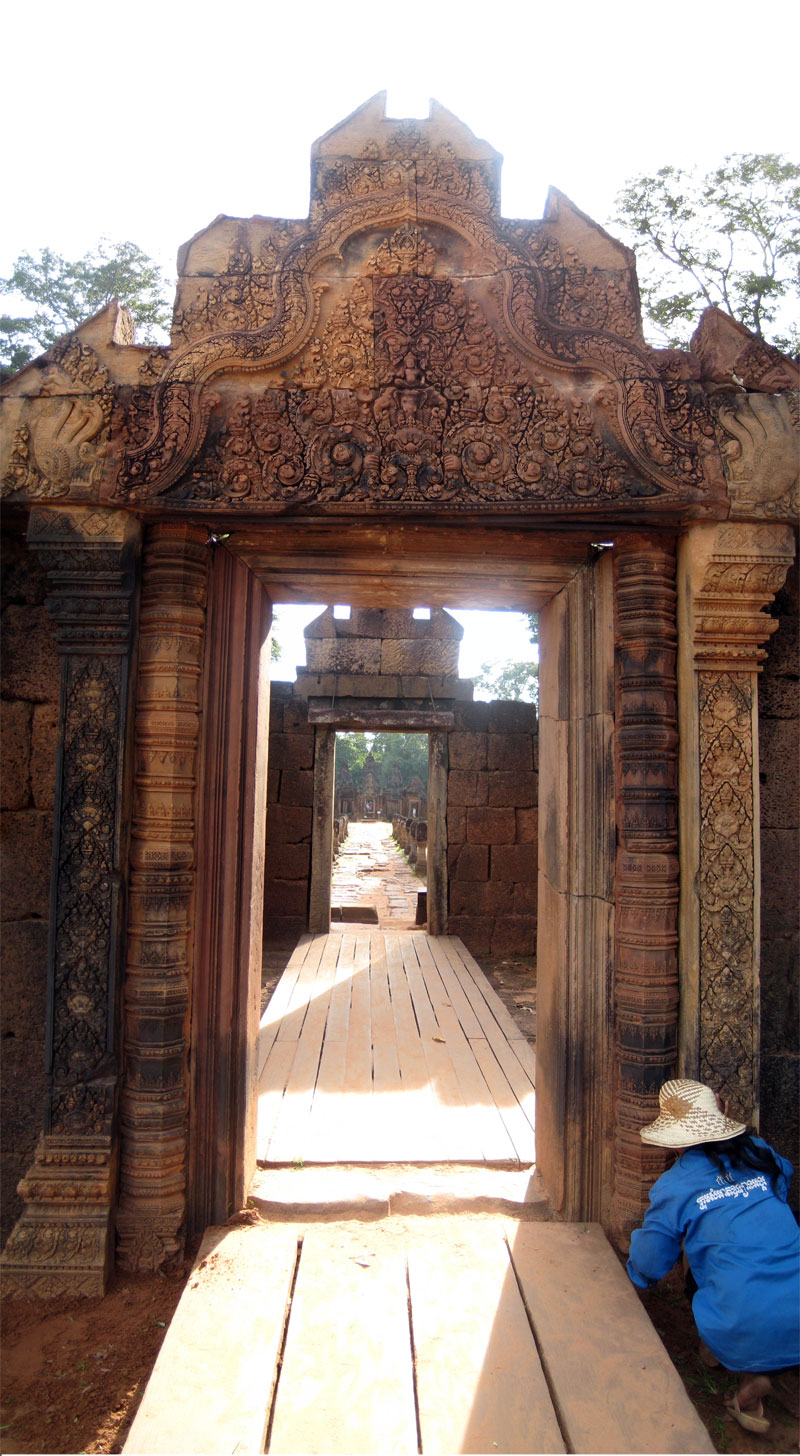 Banteay Srei is actually more ornate than most because it's made of red sandstone which is softer and allows for more detailed carving.


And that's all I got. Hope you enjoyed it. I know I did.

1 comment:
These pictures are beautiful! Looks like it was a wonderful trip.
Post a Comment